
Stephen Jenkinson, Moon Cycles, and the Lost Art of Crossing Life’s Thresholds
Most of us were taught to think of time as a line.
It begins somewhere behind us, moves steadily forward, and carries us toward a future that is always just out of reach. We are urged to get ahead, to make plans, to realise our potential before it runs out. If something belongs to the past, we are encouraged to leave it there. Progress, after all, depends on moving on.
And yet, many people feel an unnameable disquiet living inside this story of time.
Patterns repeat. Old questions resurface. Long-resolved matters return wearing new clothes. The sense of becoming, of ripening into something meaningful, often feels strangely absent, replaced by acceleration, productivity, and a quiet anxiety about falling behind.
The Shapes of Time and Their Consequences
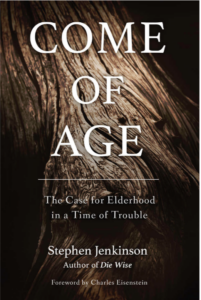
In Come of Age, cultural activist and teacher Stephen Jenkinson’s invites us to consider that this discomfort may not be personal failure at all. It may be the consequence of how we imagine time itself.
In Chapter 8, The River of Abundance and Time, Jenkinson asks a deceptively simple question:
“What if the river of time doesn’t flow where we think it does?”
He describes three dominant ways cultures imagine time: linear, circular, and spiral. Each shape, he suggests, carries moral, psychological, and cultural consequences—whether we are aware of them or not.
Linear time moves relentlessly from past to future. It enthrones progress, novelty, and potential. In this model, the young are burdened with expectation and the old are quietly dispossessed. If the future is where meaning lives, then aging becomes a gradual exile from relevance. Memory is reduced to something we mine for lessons before moving on.
Circular time offers a corrective, but only a partial one. Here, everything returns. The seasons repeat, patterns recur, fate prevails. While this can soothe the excesses of progress, it can also flatten difference. Repetition becomes inevitability. Growth risks being replaced by resignation.
Jenkinson’s real interest lies in a third image: spiral time.
Spiral time is a way of understanding life where experience doesn’t just accumulate, it deepens. Where what has been lived is not discarded or endlessly repeated, but carried. Where the past is not behind us, but before us, drawing us forward into greater responsibility and care.
Spiral time remembers. It returns, but never to the same place in the same way.
This, Jenkinson argues, is the only conception of time capable of sustaining elderhood—not as an age category, but as a cultural function. Elders are not those who have merely lasted, but those who carry memory on behalf of the people.
Without a shared story of spiral time, elderhood collapses. And with it, our capacity to mature in any meaningful way.
Moon Cycles and the Architecture of a Spiralling Life
The Sweet Medicine SunDance teachings that form the heart of Earth Lodge Australia also understand time in this way.
Rather than treating life as a single forward march, this system recognises four distinct Moons, broad phases of our human development, each lasting approximately twenty-seven years:
-
- The Child Moon, where learning comes through curiosity, sensation, and direct experience
-
- The West (Adolescent) Moon, focused on identity, competence, world-building, and personal power
-
- The North (Adult) Moon, where meaning, contribution, and legacy begin to outweigh status and accumulation
-
- The East (Elder) Moon, oriented toward wisdom, story, spirit, and preparing for return
Within each Big Moon, life unfolds through three-year Circles of Life Experience that carry particular teachings and challenges. These are not “stages” to graduate from, but living cycles we revisit across different Big Moons, each time with a new perspective and greater capacity.
Between these Circles lie Chaotic Journeys: potent threshold periods where orientation dissolves, certainty falters, and something essential must be released before the next cycle can begin. These passages are not malfunctions. They are how change actually happens.
The Moon Cycles give you a way to locate yourself in time without predicting or prescribing what comes next. Your Standing Place on the wheel tells you what kind of learning is being asked of you now. Not why this keeps happening, but what is being asked. This is spiral time made practical. Nothing is wasted. Nothing is rushed. Experience ripens according to its own rhythm.
You can read more on the four big moons here and the circles of life experience here.
Where Jenkinson and the Sweet Medicine Speak the Same Language
While Jenkinson does not reference the Moon Cycles, the resonance is striking.
Both frameworks reject the idea that life is primarily about accumulation or escape into a better future. Both insist that experience matters, and that time gains depth only when what has been lived is allowed to inform what comes next.
Jenkinson warns that linear time steals from the old and burdens the young. The Moon Cycles make the same observation in lived form. Without conscious thresholds, people may linger in the tasks of the Child or Adolescent Moons far longer than is nourishing, or be thrust into Adult responsibilities without the inner resources to carry them.
Both perspectives recognise that elderhood cannot be self-appointed. It requires time, witnessing, and community recognition. Wisdom does not arrive simply because the years have passed; it emerges when experience is metabolised, named, and offered in service of the whole.
Most importantly, both insist that the past is not gone.
In spiral time, memory is not nostalgia. It is a living presence. The Moon Cycles honour this by inviting people—again and again—to revisit familiar territory with new eyes. The question is never “Why is this happening again?” but rather, “What is being asked of me now, at this point in my life?”
Rites of Passage: The Missing Technology of Time
If spiral time is the truth of human maturation, why do so many people feel stalled, disoriented, or prematurely exhausted?
Jenkinson is blunt: modern culture has largely abandoned Rites of Passage. Without them, transitions still happen—but without meaning, containment, or communal witness. We cross thresholds alone, improvising identities as we go, often mistaking chaos for failure.
The Moon Cycles assume that thresholds matter. Chaotic Journeys are not problems to be solved, but passages to be guided. Rites of Passage provide the relational and ceremonial structure that helps people complete one cycle before entering another.
This is not about nostalgia for ancient cultures or importing ceremony for its own sake. It is about restoring a human-scale relationship with time—one that honours endings as much as beginnings, and understands that maturation is not automatic.
Without such structures, people are left to navigate profound life transitions—adolescence, midlife, elderhood—armed only with personal will and social expectation. The result is often burnout, disillusionment, or a sense of being permanently “in between.”
A Place Where Time Is Held Differently
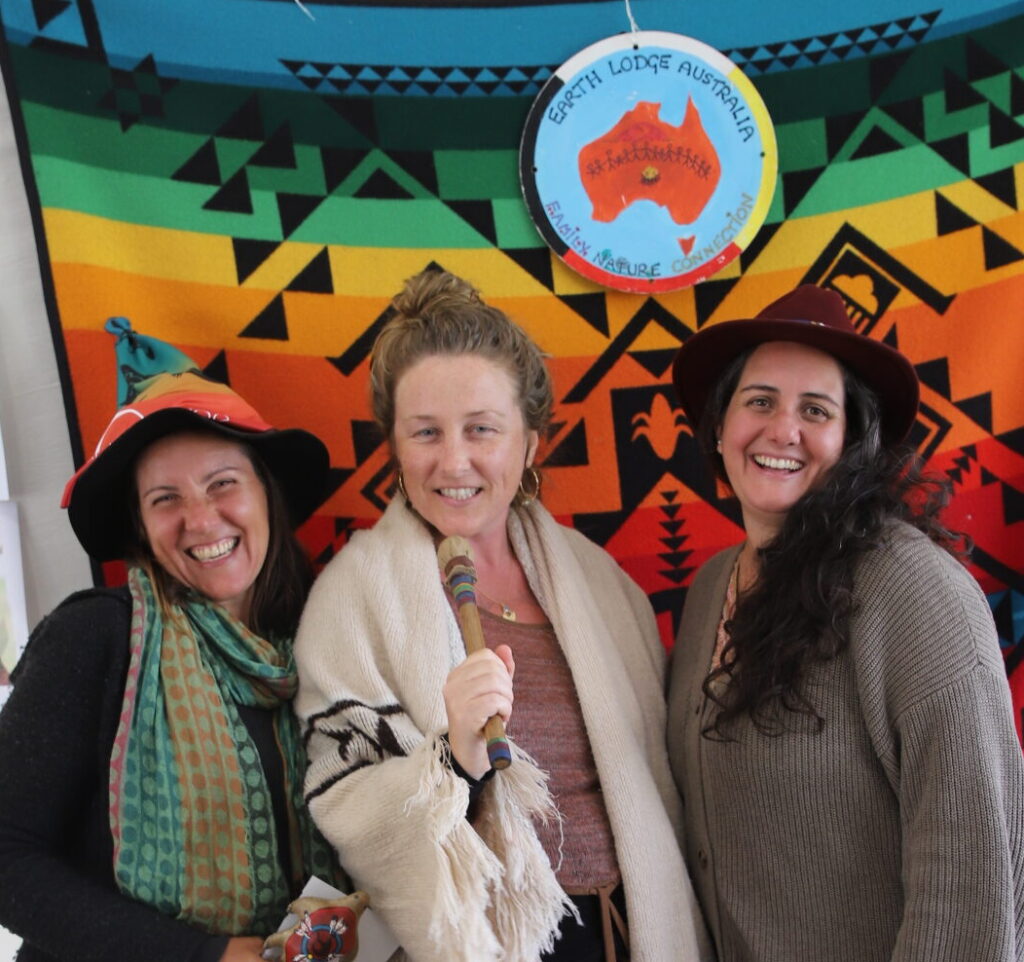
This is the context in which gatherings like Earth Lodge Australia exist—not as events to consume, but as temporary villages where time is held differently.
Within the Sweet Medicine SunDance tradition, life is understood to unfold through cycles and crossings: Circles of Life Experience that carry us around the Medicine Wheel again and again. Earth Lodge brings this understanding into lived, communal space—where children, adolescents, adults, and elders are not separated by age, but connected through shared presence and responsibility.
Here, thresholds are recognised rather than rushed. Crossings between cycles are witnessed, named, and supported, so that what is ending can truly be completed, and what is beginning can be met with care.
No one is promised transformation; they are offered conditions in which it may occur.
People are invited to slow down enough to sense their own standing place in the larger turning of life—and to remember that becoming human was never meant to happen alone.
Standing at the River’s Edge
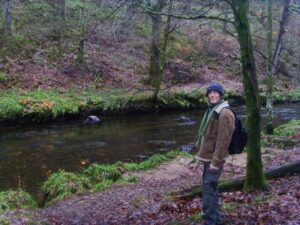 Jenkinson suggests that when we step into the river of time and feel its current honestly, we may discover something unsettling and consoling at once: that we are not moving away from what matters, but toward it.
The Moon Cycles echo this insight. What returns is not punishment or failure, but invitation. Each cycle offers another chance to meet life with greater honesty, responsibility, and care.
If this way of understanding time stirs something in you, if you sense you may be standing at a threshold rather than falling behind, it may be worth pausing there, listening and allowing the question to remain open.
Not everything that calls us forward lies in the future.
Some things are waiting for us in the deepening of time itself.
Earth Lodge Australia 2026 runs 28 September to 3 October in the hinterland of South East Queensland. Registration is open now.